You have finally tracked down the raw back issue you have wanted for years, the seller’s photos look clean, the price feels fair, and then a small voice asks whether that suspiciously bright cover or that unusually flat spine is hiding something. For collectors buying unslabbed Marvel comics, that doubt is not paranoia. Restoration and pressing are real, widespread practices in the hobby, and neither one announces itself on a listing page.
This guide walks through what restoration and pressing actually involve, how CGC’s own labelling system treats each one, and the practical checks a Singapore collector can run before handing over payment for a raw back issue. None of this is about turning every buyer into a conservator. It is about knowing enough to ask the right questions, read a listing’s photos properly, and trust your own eyes when something looks slightly off.
Restoration and Pressing Are Not the Same Thing
Restoration means a comic has been physically altered to look closer to its original, unread state. That covers colour touch on a faded or chipped cover, added paper or tissue to fill a missing corner, glue or tape used to reseal a torn page, and trimming an edge to remove roughness. Each of these adds or removes material from the book, which is why collectors and grading services treat restoration as a change to the comic’s history that has to be disclosed, regardless of how skilfully the work was done.
Pressing is different. A proper pressing service, including CGC’s own in-house option, works on defects that do not break the colour surface: dents, spine rolls, minor warping, and surface soiling. CGC describes its own process as one that does not involve heat, chemicals, or disassembly, and that “neither adds nor takes away” material from the book. That distinction has real consequences: pressing is generally accepted as a cosmetic improvement, not an alteration, while restoration is not.
How CGC’s Labels Flag Restoration
When a comic goes through CGC and restoration is found, it comes back in a purple holder rather than the standard blue one. The purple “Restored” label covers everything from a single light touch-up to extensive amateur repair work, graded on its own A-1 to C-5 scale. A green “Qualified” label is a separate category used for a specific, named defect such as a missing coupon, and should not be confused with restoration. A handful of other label colours, including a blue-grey “Conserved” tier for structural repairs that improve preservation without disguising damage, round out CGC’s grading labels system.
The practical point for a collector buying raw is that a CGC label is doing disclosure work that a loose back issue cannot do for itself. According to GoCollect’s market analysis of restored comics, the gap between an unrestored and a restored example of the same book “can be substantial, especially on higher grades,” although the size of that gap varies from book to book and sometimes narrows for lower grades or less dramatic restoration work. A raw comic carries none of that paper trail, which is exactly why a quick check at the point of sale pays off far more often than collectors expect.
None of this requires a CGC account or sending books away to find out. It simply means understanding what each label colour promises before leaning on it as proof of anything.
The Telltale Signs of Restoration
A handful of checks catch most amateur and mid-tier restoration work without any special equipment:
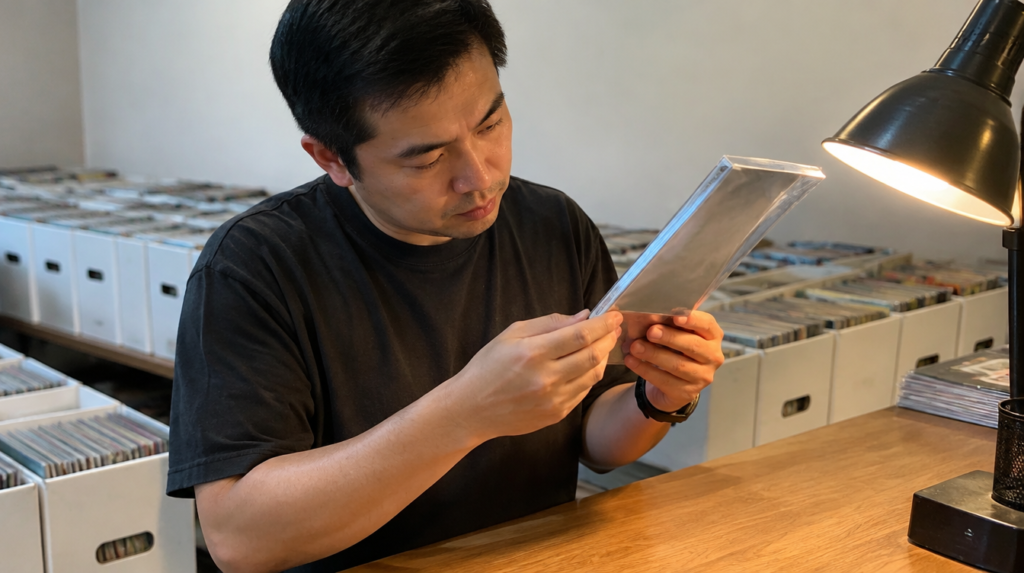
- Colour touch: look along spine ticks, corner tips, and cover creases under a strong lamp or natural daylight. Touched-up ink often sits slightly duller or glossier than the surrounding original colour, and it can look faintly chalky at an angle.
- Trimmed edges: compare the top, side, and bottom edges against another copy of the same issue if you can. A trimmed book often looks a shade too crisp or perfectly square for its claimed age.
- Reglued or retaped spines: run a finger lightly along the spine for stiffness or an unnatural sheen that does not match the rest of the cover stock.
- Married pages or a recased centrefold: check that the staples sit through the original holes and that the interior paper stock and colour match the cover’s era.
- Added or filled-in material: hold the book up to a light source and look for a patch, however small, around a corner or spine split where the paper looks slightly different in thickness, texture, or colour match, which often shows as a faint seam line.
Pressing Is Quieter, but Not Invisible
Pressing is harder to spot because, done well, it leaves no residue and adds nothing to the page. A spine that looks unnaturally flat, with none of the small stress lines you would expect from a forty-year-old comic, is one clue, especially if the corners look correspondingly sharp for the book’s stated grade. Cover sheen that seems inconsistent, glossier in patches than the surrounding paper stock, can also point to a pressing job instead of a book that was simply well cared for from day one.
None of these signs are proof on their own, and a well-stored, lightly-read copy can look similarly clean. That is precisely why pressing concerns are usually a prompt to ask the seller a direct question, not a reason to walk away outright.
A Simple Routine Before You Buy a Raw Back Issue
Before paying for any raw book above a modest price point, run through this short routine.
- Ask the seller directly whether the book has been pressed, restored, or both, and ask for the answer in writing if the deal is happening online.
- Request clear, well-lit photos of the spine, all four corners, and both the front and back cover under natural light.
- Compare the listed grade against the defects visible in those photos. A grade that looks noticeably better than the photos suggest is a reason to ask more questions, not fewer.
- Check the price against recent sold listings for the same issue, printing, and approximate grade on a market-data source, since an unusually low price can sometimes signal undisclosed work.
- For anything you are genuinely unsure about, ask to view the book in person before completing payment, or buy from a seller willing to offer a condition guarantee.
- Keep your own notes and photos at the point of purchase, so you have a reference if a dispute over condition comes up later.
Why Raw Books Carry More Risk Than Slabbed Ones
A CGC-slabbed comic settles the restoration question before you ever touch it, since the label and population report do that work for you. A raw back issue carries no such certificate, so the burden of catching an undisclosed repair sits with the buyer and, just as importantly, with a seller willing to describe defects honestly instead of photographing around them.
This is also where buying habits shift. Collectors moving between slabbed and raw books, or weighing whether to buy second-hand at all, often underestimate how much restoration awareness changes the calculation. Our guide on how to buy second-hand Marvel comics goes into more detail on vetting sellers and reading condition descriptions, and it pairs well with the checks above if you are building out a run of back issues instead of chasing a single key.
None of this means raw books are a poor way to collect. It means treating the inspection step as part of the purchase, not an afterthought skipped because the price looks right.
How The Last Bookshop Handles Condition and Disclosure
We assess every raw back issue that comes through trade-in or want-list sourcing with the same conservative eye described above, flagging spine ticks, reading creases, subscription stamps, and anything that looks like colour touch or a repaired tear, even when the defect is small enough that a less careful seller might let it slide. For slabbed comics, we rely on CGC’s own labelling instead of making any grading claims ourselves, since CGC grading is an independent third-party service and not something we perform in-house.
If a comic you receive from us does not match its listed condition, our fourteen-day resolution window gives you time to raise it after the book is in hand, not just at the point of sale. We would rather lose a sale than have a collector feel misled about what they paid for, which is the same standard we would want applied if the roles were reversed.
Conclusion
Learning to spot this kind of work will not turn a weekend collector into a professional grader overnight, and it does not need to. A steady routine of good lighting, a few careful questions, and a willingness to walk away from an answer that does not add up will catch the overwhelming majority of undisclosed work before it becomes your problem. If you would rather talk through a specific back issue before committing to it, feel free to reach out to us and we will give you an honest read on what we see.
Frequently Asked Questions
Does pressing lower a comic’s resale value?
Not on its own. Pressing is generally treated as a cosmetic service, not an alteration, since it does not add or remove material from the book, though serious buyers may still ask whether a book has been pressed before making an offer.
Can a CGC “Qualified” green label mean the book was restored?
No. CGC’s green label flags a specific disclosed defect, such as a missing coupon or page, and is a separate category from the purple “Restored” label. Some other grading services use green differently, so check carefully if you are comparing labels across companies.
Is it ever acceptable to buy a known restored copy?
Many collectors do, particularly for scarce or expensive keys where an unrestored copy is hard to find at any price. The key difference is disclosure: a seller who tells you upfront is offering a fair deal, while undisclosed restoration passed off as original is a different matter entirely.
What should I do if I suspect a book I already bought has undisclosed work?
Document what you see with clear photos and, where possible, get a second opinion from an experienced collector or a shop that handles raw back issues regularly before raising the issue with the seller.
Do subscription stamps or crease lines count as restoration?
No. Those are condition defects that affect grade, not alterations, and a conservative seller should simply disclose them as part of describing the book instead of treating them as something to hide.
Does Singapore’s climate make restoration harder to spot?
Our humidity can accelerate paper ageing and cover wrinkling over time, which sometimes makes genuine wear look more dramatic than it would in a drier climate. That is a useful reason to compare a suspicious area against the rest of the book in good light instead of assuming heavy wear automatically signals undisclosed work.