
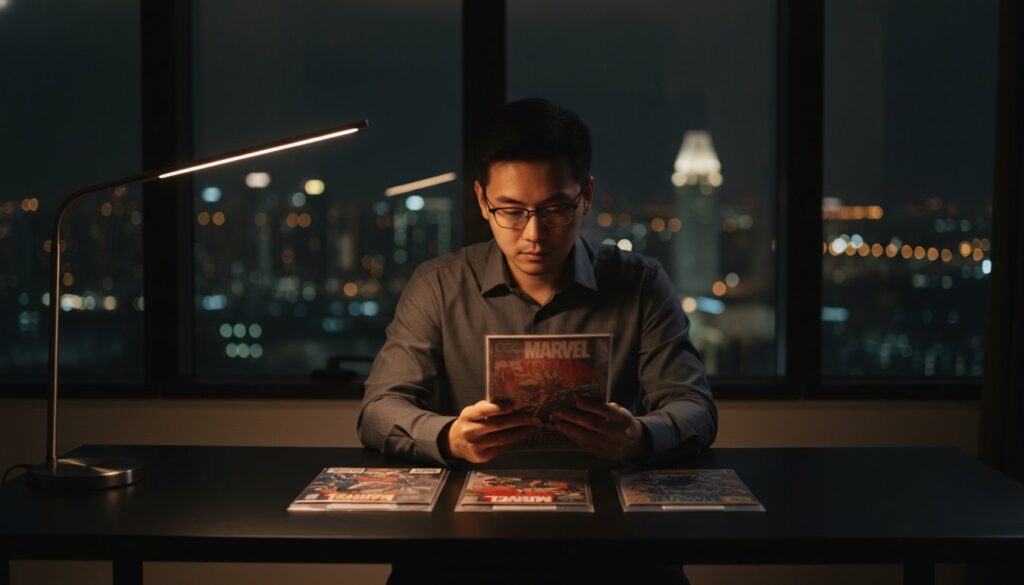
Did you know that certain high-profile modern Marvel back issues have seen their market value retract by as much as 85 per cent since the 2021 peak? Whilst the Young Avengers #1 record of approximately S$2,100 feels like a distant memory, the current market correction has created a unique opportunity for the disciplined collector. You likely feel the frustration of sifting through endless variant covers or struggling to find pristine 9.8 candidates amongst local listings. It’s a common sentiment; the transition from speculative hype to a mature market requires a more analytical eye.
This guide will show you how to master the nuances of strategic collecting by identifying genuine scarcity rather than manufactured buzz. You’ll learn to evaluate the ratio variant market with confidence and discover how to secure investment-grade copies within Singapore’s 9 per cent GST landscape. We’ll break down the meticulous specialist approach needed to build a curated collection that stands the test of time, focusing on authenticity and condition over short-term trends.
Key Takeaways
- Define the modern era of collecting by identifying characters and milestones that have transitioned into genuine blue-chip assets.
- Decipher the retailer incentive model to distinguish between standard covers and high-value ratio variants that command a market premium.
- Understand why the CGC 9.8 grade serves as the essential benchmark for preserving the long-term value of modern Marvel back issues.
- Optimise your acquisition strategy by sourcing from a specialist Singaporean retailer to manage GST and currency fluctuations with transparent pricing in SGD.
- Adopt a disciplined curation framework that prioritises historical importance and scarcity over short-term speculative hype.
Defining the Modern Marvel Back Issue Landscape
The Modern Age of comics is a broad category, but for the discerning enthusiast, the true “modern” era begins with Marvel’s creative resurgence in the late 1990s. This period marked a definitive departure from the mass-market newsstand distribution of the past, as the industry fully embraced the Direct Market model. Unlike the over-printed issues of the early 90s, books produced from 1998 onwards often had more conservative print runs tailored to a dedicated hobbyist audience. Collecting modern Marvel back issues today isn’t just about nostalgia; it’s about securing a physical record of the stories that laid the foundation for the current cinematic era. While digital platforms offer ease of access, they lack the tactile satisfaction of original paper stocks and the specific ink finishes that define these physical artefacts.
The Significance of the Post-1998 Relaunch
The “Heroes Reborn” era’s conclusion paved the way for a more sophisticated, creator-driven Marvel. The launch of the Marvel Knights line and the subsequent Ultimate Universe fundamentally changed the collecting landscape. High-profile creators introduced grounded, cinematic storytelling that attracted a more mature demographic. For many enthusiasts in Singapore, these early 2000s keys have become the “Silver Age” of the modern era. They represent a shift toward quality over quantity, where rarity is often driven by genuine narrative impact rather than the artificial gimmicks of previous decades. This era’s focus on character reinvention makes it a fertile ground for those looking to build a collection with long-term cultural relevance.
Physical Condition in the Modern Era
In this market, “Near Mint” isn’t a goal; it’s the baseline expectation. Modern production standards, involving thinner paper and glossier finishes, mean that even a minor handling error can result in a visible spine tick or colour break. Because modern Marvel back issues are generally better preserved than their 1960s counterparts, the competition for the highest grades is fierce. A meticulous specialist understands that vetting inventory requires more than a quick glance. It involves a disciplined assessment of corner sharpness and surface gloss to ensure a book truly meets investment-grade standards. This level of precision is what distinguishes a curated collection from a mere stack of comics, providing a sense of security for collectors who value authenticity above all else.
Scarcity and the Rise of Ratio Variant Covers
In the collectible comics market, the concept of scarcity has evolved from the accidental survival of vintage books to the calculated production of the modern era. When sourcing modern Marvel back issues, you will frequently encounter the retailer incentive model. This system uses ratios such as 1:25, 1:50, or 1:100 to dictate rarity. These numbers represent the specific quantity of standard “A” covers a retailer must order to earn the right to purchase a single incentive variant. Because these books are tied to ordering thresholds, their total population is strictly limited by the number of shops participating in a release. This creates a transparent, verifiable scarcity that appeals to the disciplined collector.
Identifying a true ratio variant whilst browsing a back-catalogue requires a keen eye for artist credits and cover numbering. Unlike “Open Order” variants, which are printed to meet total customer demand, ratio covers are often the first to disappear from shelves and the most resilient against market corrections. High-profile examples, such as the Amazing Spider-Man #667 Gabriele Dell’Otto variant, demonstrate how extreme scarcity combined with iconic art can drive a book to become a modern holy grail. If you are looking to add these rare pieces to your long-term portfolio, you may wish to browse our current selection of Ratio Variants.
The Mechanics of Incentive Scarcity
The value of a ratio variant is often anchored by the artist’s popularity. Creators like Peach Momoko or Skottie Young have cultivated dedicated followings, ensuring that their 1:50 or 1:100 covers remain in high demand long after the initial release. Whilst “hot” artists can experience volatile pricing during a speculative surge, those with a consistent track record of quality tend to hold their value better than standard covers. A meticulous specialist looks beyond the immediate hype, focusing on artists whose work has historically maintained a strong secondary market presence.
Exclusive Covers and Store Variants
Exclusive covers represent a specialised tier of modern collecting where a retailer commissions a unique piece of art for a specific title. These are amongst the most sought-after modern Marvel back issues due to their strictly capped print runs. Collectors must distinguish between “Trade Dress” versions, which include the standard masthead and logos, and “Virgin” variants that showcase the artwork without any obstruction. Virgin copies are typically produced in much smaller quantities, making them a priority for enthusiasts who view comic books as a form of fine art preservation. This artistic focus often leads collectors to explore blank sketch variants; for those interested in creating custom cover art, sourcing high-quality markers from PoscART ensures professional results on the specific paper stocks used in modern publishing.
Identifying Key Modern First Appearances and Milestones
Identifying a “key” issue within the modern era requires a more analytical framework than simply looking for a first appearance. Whilst Silver Age keys are often defined by their historical seniority, modern Marvel back issues achieve blue-chip status through a combination of cultural resonance and verifiable scarcity. The “Miles Morales Effect” illustrates this perfectly. His debut in Ultimate Fallout #4 has reached a record price of approximately S$6,075, marking it as a cornerstone of modern collecting. However, the influence of the Marvel Cinematic Universe often creates speculative volatility. For instance, Young Avengers #1 (the first appearance of Kate Bishop) recently sold for around S$310, which is a significant retraction of over 85 per cent from its peak of S$2,160. To ensure long-term value, many collectors turn to Professional Grading to verify the authenticity and condition of these milestones.
A disciplined collector looks past the immediate hype to find “hidden keys.” These are issues where a character’s first appearance or a pivotal plot point hasn’t yet been fully priced into the market. Spotting these before they spike requires a deep understanding of ongoing narrative arcs and creator movements. For collectors ready to move beyond emotional purchasing decisions, our specialist guide to Marvel comics investment in Singapore provides a practical framework for identifying these opportunities before the market reacts. It is this meticulous approach that separates the hobbyist from the specialist curator.
Top Tier Modern Marvel Keys
Analysing the market for NYX #3 (the first appearance of X-23) reveals the importance of timing. A CGC 9.8 copy recently sold for approximately S$1,215, down about 40 per cent from its record of S$3,037. Similarly, Thanos #13 (the first Cosmic Ghost Rider) has seen a 60 per cent correction from its S$4,455 high to a recent S$1,485. These figures demonstrate that whilst modern cornerstones like Edge of Spider-Verse #2 remain essential, the entry price is a critical factor in your collection’s overall health. Sustained demand for characters like Knull or Kamala Khan suggests these books have moved beyond mere speculation into established territory.
Event Books and Milestone Issues
Major crossovers like Civil War, Secret Wars, and House of M remain popular amongst those building a comprehensive run. It’s a common misconception that issue #1 is always the most valuable. Often, a later issue featuring a pivotal death or costume change can command a higher premium due to lower mid-run print numbers. You should also consider the role of Facsimile Editions. These reprints allow enthusiasts to enjoy the tactile experience of a key story without the high entry cost of an original, though they rarely achieve the same investment status as true modern Marvel back issues from the first printing.
Protecting Your Investment: Professional Grading and Preservation
The transition from a raw copy to a professionally authenticated slab represents a shift from speculation to security. For modern Marvel back issues, condition is the primary driver of value, making third-party assessment by the Certified Guaranty Company (CGC) an essential step for high-value assets. A graded book provides a level of psychological security that raw copies cannot match; it guarantees the absence of restoration and confirms an objective grade that is recognised globally. This standardisation is particularly vital in a market where a single spine tick can significantly alter a book’s trajectory.
In Singapore, collectors must account for the 9 per cent GST and the logistical complexities of international shipping when considering the total cost of their collection. Because the market has become increasingly sophisticated, the demand for “slabbing” has moved beyond just the top-tier keys to include rare ratio variants and exclusive covers. If you are looking to add verified quality to your portfolio, you can explore our curated selection of CGC-Graded Slabs.
Understanding the CGC Grading Scale
The 9.8 grade is widely considered the “Gold Standard” for the modern era. Whilst a 9.6 is technically a near-pristine copy, the market value for a 9.8 often commands a premium that is double or triple that of its lower-graded counterpart. You should also distinguish between the Universal Blue Label and the Signature Series Yellow Label. The latter indicates that a signature was witnessed by a CGC representative, providing an extra layer of provenance that is highly prized amongst enthusiasts. For high-value ratio variants, this level of certification is often the difference between a speculative purchase and a blue-chip investment. Collectors seeking to understand how condition and rarity interact within the local market may benefit from reading our dedicated guide to Marvel comics investment in the Singapore market, which addresses asset preservation strategies in detail.
Best Practices for Home Preservation
If you prefer to keep your modern Marvel back issues raw, meticulous home preservation is mandatory. Use acid-free boards and 2-mil Mylar bags to prevent chemical degradation and “tanning” of the paper over time. Your storage environment should be a stable centre with controlled light, temperature, and humidity; excessive heat or UV exposure can cause ink fading and paper brittleness. Organise your back-catalogue in a way that minimises physical handling. A disciplined approach to organisation not only protects the books but also allows you to audit your collection’s condition regularly, ensuring your investment remains as pristine as the day it was released.
Navigating the Singapore Market for Modern Marvel Collectibles
For enthusiasts in Singapore, sourcing modern Marvel back issues often involves high international shipping fees and the unpredictability of currency exchange. By choosing a local specialist, you bypass the volatility of foreign markets and the complexity of importing fragile paper across borders. Pricing in Singapore Dollars (SGD) provides immediate clarity; it allows you to manage your budget without the hidden costs often associated with overseas platforms. This regional focus ensures that the 9 per cent GST is handled transparently, providing a low-friction acquisition process for your collection. Avoiding long-haul transit also reduces the risk of environmental damage, whilst ensuring that your investment-grade books aren’t subjected to unnecessary handling by multiple international carriers.
Beyond the logistics of comic collecting, residents in Singapore often require other professional services that value precision; for those looking to update their official documentation, you can learn more about obtaining high-quality passport photos at PhotoNow’s self-photo studio.
Transparent Logistics and Dispatch
Protective packaging is a non-negotiable standard for any high-grade collectible. The Last Bookshop utilises rigorous packing protocols to ensure that every dispatch reaches its destination in the same condition it left our shelves. Whether you are securing a raw key or a CGC-graded slab, our logistics framework is designed to prevent spine damage and corner blunting. Local support for order enquiries means you won’t have to navigate different time zones or deal with automated bots to track your delivery. We recommend checking our inventory on New Comic Book Day, as this is frequently when fresh back-stock and recent acquisitions become available for the local community. This steady rhythm of updates ensures that serious collectors don’t miss out on high-demand releases amongst the weekly shuffle.
The Last Bookshop: Your Meticulous Marvel Specialist
Our business model is built on the principle of the meticulous specialist. We have made a deliberate choice to exclude DC Comics, Manga, and Graphic Novels from our inventory. This singular focus allows us to provide a deeper, more comprehensive selection of Marvel titles than a generalist storefront. We curate our collection with a disciplined eye, prioritising the first appearances and ratio variants that define the current market. By concentrating solely on one publisher, we can offer superior domain expertise to both newcomers and veteran collectors who value precision. You can explore our latest Modern Marvel back issues and variants to find the next cornerstone for your curated collection.
Elevating Your Curated Marvel Portfolio
Building a collection of modern Marvel back issues requires a definitive shift from speculative volume to disciplined curation. You’ve seen how identifying true ratio scarcity and focusing on the gold standard of CGC 9.8 grades can insulate your investment against broader market corrections. By prioritising historical milestones and genuine first appearances, you ensure your archive holds cultural and financial value far beyond the current news cycle. Precision is the collector’s greatest asset in a market defined by condition and authenticity.
We provide the professional framework needed to secure these high-grade assets with absolute confidence. Our specialised inventory is exclusively dedicated to Marvel, ensuring a depth of stock that generalist retailers cannot match. With transparent pricing in SGD and secure national dispatch across Singapore, we remove the friction of currency volatility and international shipping risks. We invite you to browse our curated collection of Modern Marvel Back Issues and discover investment-grade slabs and rare variants vetted by experts. Your journey towards a world-class collection starts with a partner who values meticulous standards as much as you do.
Frequently Asked Questions
What is considered a “modern” Marvel back issue?
The Modern Age generally encompasses comic books published from the mid-1980s to the present day. However, for the disciplined collector, the era truly matured with the late 1990s relaunch, which introduced higher production standards and a shift toward the Direct Market model. This period is defined by a move away from mass-market newsstand distribution in favour of specialised hobbyist channels.
Why are ratio variants more expensive than standard covers?
Ratio variants are more expensive because their supply is strictly limited by retailer ordering thresholds. To earn a single 1:25 variant, a shop must order twenty-five copies of the standard “A” cover, creating a transparent and verifiable level of scarcity. This calculated production model ensures that demand often outstrips the limited number of copies available in the secondary market.
Is it better to buy CGC graded comics or raw back issues?
The choice depends on whether you value tactile access or investment security. CGC-graded slabs provide an objective, third-party assessment of condition and protect the book from environmental degradation, which is essential for high-value modern Marvel back issues. Raw issues allow you to enjoy the internal artwork and story, though they require meticulous home preservation to maintain their market value.
How do I know if a modern Marvel comic is a “key” issue?
A “key” issue is defined by significant narrative milestones such as the first appearance of a character, a major death, or a definitive costume change. These books are the cornerstones of the market because they represent pivotal moments in Marvel history. Monitoring creator movements and ongoing story arcs is the most effective way to identify these keys before they experience a speculative price surge.
Do you sell DC Comics or Manga alongside Marvel back issues?
No, we do not stock DC Comics, Manga, or Graphic Novels. We have made a strategic decision to remain a Marvel-only specialist to ensure we provide the deepest possible inventory for serious enthusiasts. This focus allows us to maintain superior domain expertise and a more comprehensive selection of ratio variants and graded slabs than a generalist storefront.
How are comics dispatched to ensure they arrive in Near Mint condition?
We utilise a disciplined packing protocol that includes rigid, reinforced mailers and acid-free protective materials. Every order is secured to prevent shifting during transit across Singapore, ensuring that fragile paper edges and corners remain pristine. Our logistics framework is designed to meet the high standards of collectors who prioritise condition and preservation above all else.
What is the difference between a 1:25 and a 1:100 ratio variant?
The difference lies in the extreme disparity of their print runs. A 1:100 variant is significantly rarer than a 1:25 because it requires a retailer to commit to four times the order volume of the standard book. This increased barrier to entry results in a much lower total population, which typically leads to a higher market premium for the 1:100 edition.
Why should I collect physical Marvel comics instead of reading digitally?
Physical modern Marvel back issues are tangible assets that offer a tactile history and the potential for financial appreciation. Whilst digital platforms provide a convenient reading service, they don’t grant true ownership of a physical artefact. Collecting physical issues allows you to build a curated archive of original art and paper stocks that digital files simply cannot replicate.